About Me

My photo
Hello, dear viewer, and thank you for visiting my blog! I am a dedicated (and certified) Food Coach and Personal Trainer with a very individual attitude to coaching. I search to look beyond people's health issues and modify their lifestyles so that they can live a healthier life, increase vitality and longevity. Recently as a strong believer in natural healing I have published two books on Ayurveda and how to use Ayurveda lifestyle and food at home. Further, I am very much into TCM and the concept of original Chinese Food, especially after my recent stay in China. I am striving to become a Yoga expert through intense training and am practicing some kind of exercise every single day. My second blog http://thrumyeyes-kat.blogspot.com/ is dedicated to my passion to capture the world with my camera and create my own world like that. Everything you will find on these pages about nutrition and exercising is authentic and self-tested. Enjoy and don't forget to send me your comments, which are always welcome in my attempt to meet your expectations even better!

Monday, 9 December 2013

Wheat grass - the green health from nature

Dear audience,

In our high-tech times when a lot of stuff is better , but not necessarily our general health, and in which we have to protect our organisms much more than ever before against "hostile attacks " such as the so-called free radicals, we are turning back to the old remedies provided by mother nature.

Wheatgrass was introduced thousands of years ago as one of the most valuable plants of nature in different cultures into the base diet.

Go green - this is a phrase that nowadays should no longer relate merely to our environment, but also to our kitchen .

And so since quite some time something green haunts our kitchens. In juice form, powdered or even fresh, home-grown from seed - wheat grass. Packed with chlorophyll (70 %), it contains over 30 different enzymes that keep us young, healthy and beautiful.


The green prodigy is thus not an invention of modern times. Even in our hemisphere already back in the 30's many celebrities  consumed these little powerpackets; popularized by Anne Wigmore (http://en.wikipedia.org/wiki/Ann_Wigmore) and Dr. Charles Schnabel (http://www.allvoices.com/contributed-news/6693566-wheat-grasscharles-francis-schnabel-discovered-nutrientsmodern scientific analysis suggests the assumption that wheatgrass juice really  is one of the absolute " superfoods " with incredible impact on our civilization diseases.

Wheatgrass is the grass of the wheat, which after seeding  during the first days looks like a fresh, green lawn. Sounds logical . By pressing the wheatgrass juice is extracted, to which special healing power is attributed .


A short summary of the contents :

• wheat grass has 60 times more vitamin C than oranges
• 50 times more vitamin E than spinach
• 30 times more vitamin B1 than milk
• 11 times more calcium than milk
• 5 times more iron than spinach
• 5 times more magnesium than bananas

Furthermore, wheat grass juice is rich in essential amino acids and thus has a high protein value. It contains vitamin K and B , calcium and selenium and is a hero in the fight against cancer, because it inhibits the spread of cancer cells , the mutation of healthy cells , has anti- inflammatory  aspects and strengthens the immune system . It supports blood formation and increases oxygen transport in the blood and general vitality.

It might not yet be anything scientifically proven, but the existing studies and thousands of years of experience , e.g. in Chinese medicine, clearly show the positive above mentioned effects.

A simple and safe method of consumption is the wheatgrass in powder form, which can be wonderfully simply infused with hot water and consumed at body temperature, or find its place in any smoothie to round out its taste by its fresh, sweet character. Be it with apple and ginger or with banana, pineapple and coconut milk , cinnamon and maca.

Drank in the morning on an empty stomach, wheatgrass within 20 minutes develops its soothing , revitalizing effect . Some beautiful , easy to prepare recipes can be found on this link: https://www.veganic.de/ebook/Smoothie_veganic.pdf

At the beginning of consumption please be a bit cautious, the stomach must first get used to the green power drink. Especially a freshly squeezed shot can hit the stomach quite strongly in the beginning. But that disappears after a few times and you can enjoy wheatgrass and feel the power of this acid-regulating green magic in the body.


Monday, 2 December 2013

Health food - the balance on my plate

„When i walk, I walk. When I sit, I sit. When I eat, I eat.“

(Zhen Buddhism)


Dear readers,

Not only in Ayurveda, but also in Chinese Medicine and originally also in our very own European / Northern kitchen eating balanced food is essential for health and wellbeing. Like in all matters of life, it is important to be balanced, to be Yin and Yang, man and woman, sun and moon, day and night, movement and stillness. Each element is also within the other, there is no Yin without Yang for example. This balance puts us into harmony, the state of balance is called „sattva“ (middle, equilibirum), which is an old Sanskrit word. For example in Ayurveda even today we strive to eat „sattvic“ food, which will not over acidify our bodies or deprive them of important nutrients. Extreme Yin or extreme Yang food puts our body out of balance and causes the organism to oscillate between two poles.

Obviously, each individual needs a slightly different balance to meet his needs. But if you prepare a nice variety, everybody will find something at your table. That is why my husband will eat more of the fresh salad while I will have a bigger portion of the grounding sweet potatoes. 

Example for a "bad" balance: if you eat a lot of food high in Yin like meat, eggs and other animal products, these need to be balanced with a high quantity of extreme Yang food like tropical fruits, sugar, alcohol, spices. Notice something? You sure do.

This equation can be applied to all our daily life’s fields. Multitasking, stress in the office and in your free time create a state of extreme Yang, which will increase your cravings for extreme Yin: alcohol, coffee, sugar, junk food etc. This balance is deceiving, though, as it creates only a very short term equilibrium. After that, your body moves even more out of balance, which in the end will create damage, even for the mind.


An understanding of these principles is very helpful on your way to live healthy and happy.


Let me explain a bit further....

Yin = cold                                                         Yang = warm
Winter = cold                                                   Summer = warm
Winter plants = grow beneath earth             summer plants = grow above earth

In winter the body needs more Yang food  („heavier“ plants, which preserve for a longer time beneath the earth) – did your granny have salad in winter, she sure did not - whereas in summer the body needs to be cooled with Yin food (light, easily spoiled plants, which sprout above earth). Easy, no? Mother natures does take care of us. Please consider these principles also when you travel. You will not want to eat a hot potatoe-chillie soup in a tropical climate.

Try to apply these principles to your life, start with some of the following measures:

1. Always prepare fresh food. Avoid microwaving.

2. Take your time for each meal: sit, chew, digest and above all enjoy.

3. Move a lot and get your quantum of oxygen every day, which would be at least 30 minutes.

4. Take your time off distractions (computer, phone, tv etc) and try to exist more conciously, take time for family and friends, do some yoga and meditation

As far as your daily meals are concerned, a balanced plate needs

-> many colours
-> various textures
-> various tastes and spice intensity
-> something boiled and something raw
-> some nuts and seeds
-> 25-30% of whole grains
-> 15-20% (vegetable) protein

You will notice how much you will suddenly indulge, how your palate will jubilate and thus your body!

The following combination is just one example to give you an idea about what a balanced meal combination could look like:

  • Wholegrain Soba Noodles with almond-tamari sauce

  •  Quickly fried Tofu (with soya oil and spring onions)

  • Grilled pumpkin or sweet potato

  • Steamed fennel with miso dressing


Get balanced – enjoy life!


Thursday, 28 November 2013

A small introduction to the teachings of Ayurveda


 "If you can not be king be a healer. " 

(Ceylonese proverb)


Dear readers,

These days I had the fantastic, overly exciting opportunity to pick up 500 newly printed books from my printing agent. What a feeling! The book – just as the first one – talks about Ayurveda. So I am buried head to toe in Ayurvedic issues and questions people come up with.

Often though I also hear the following question:

What is Ayurveda anyway?
Ayurveda is a general philosophy of life and a teaching about the healing of disease , but above all, their prevention and thus avoidance ( Health = absence of disease ). Directly translated the Sanskrit word means "The science of long life". Ayurveda originated over 5000 years ago by contemplation in India and is thus considered to be the oldest healing science in the world . Already in the 6th century this natural philosophy found its way to Sri Lanka. At the time, the Ceylonese kings were still doctors. On the island, there are 1460 medicinal plants, 70 of which are endemic.

How does Ayurveda work ?
In contrast to our Western medicine in Ayurveda body, mind and soul form a unit, man is viewed holistically. Balance is created by living in harmony with the laws of nature . We are an inherent universe and our physical and mental balance is determined by:


• Nutrition
• Lifestyle
• Relaxation and meditation
• Yoga and breathing exercises
• Holistic diagnosis
• Medicinal Herbs and Ayurvedic medicine as well as
• Cleaning and rejuvenation measures

We consist - as well as nature - from the elements earth, water, fire , air and ether ( space ) . In Ayurveda, these elements are summarized as the so-called

Doshas
Each two of them combine to form a bio energy. Every person contains all the doshas , most of us are, however, determined by two doshas. More rarely occurs that someone is determined by only one or by Tridosha (all three doshas) . Each dosha also is associated with certain positive and negative characteristics .

KAPHA : Earth and water are responsible for the structure and stability of our body, as well for his defense force . Kapha is the principle of inertia.

PITTA: Fire and water unite in the metabolic principle. Pitta regulates all biochemical changes, such as digestion or body temperature. In a figurative sense, it is also responsible for managing emotional influences and impressions.

VATA : Air and ether form the principle of movement . Vata controls all the mental and physiological activities in the body, especially the respiratory system and our neurological functions.

Every human being is made up of an individual combination of physical, mental and emotional characteristics that create his special constitution. The preservation of our personal constitution and a good digestive fire rule on health or disease.


Why should I undergo a Ayurvedakur regularly?
An Ayurvedic cleansing (Panchakarma = 5 ways of cleansing) releases the body from waste products and toxins, levels out the doshas , strengthens the immune system and gives us balance. Ayurvedic treatments serve healthy persons as a cleansing and relaxation cure to maintain health . The energies obtained from the cure remain usually - depending on lifestyle - for approximately 6-9 months. For ailing persons Ayurveda brings cure or stabilization.

In order to obtain the success of the treatment and possibly to prolong it, there are easy-to -follow, useful tips for your home. These can be found for example in my book "Ayurveda at home " (published in Sri Lanka , available at Lanka Princess Hotel or directly from the author, German ). These suggestions are clearly described and easy to understand.

I recommend a minimum of 12 - day treatment in order to obtain the full effect and give the body the necessary time to adjust and heal, which can treat among other "common" diseases or conditions such as the following with great success:

• Nervousness and insomnia
• Indigestion
• Headaches and migraines
• Eczema and other skin diseases
• Heart and circulatory problems
• Sinus infections (sinusitis)
• Arthritis
• Stress and burn- out syndrome
• Allergies
• Stomach and intestinal diseases
• Depression
• Over - or underweight
• Tinnitus (sudden hearing loss)
• menstrual and menopausal complaints
• Back pain

But also far more serious diseases can be relieved, improved or even be healed with Ayurvedic treatments. As a consequence, drugs can be reduced or eliminated. Ayurveda has gained an excellent reputation of good results in the treatment of cancer patients.

Professor Ranaweera, Director of the Ayurvedic Research Institute in Maharagama, Sri Lanka, states: "We are particularly pleased with our treatment of type 2 diabetes, people who took Western medicines without success, here in Sri Lanka with only four different herbs got their diabetes under control."

Ayurveda, the science of life is beneficial for every type of person in any state. And the recovery and relaxation effect when you find yourself after your treatments in a bathrobe on the balcony of your hotel room in the shade, maybe even watching big drops of tropical rain fall on fresh green grounds is simply unbeatable.


Curious to know your Dosha? Just do the following, very simple test and find out. This of course is not a detailed consultation, but it may give you an initial idea. I will post on Doshas in more detail in the future.


Thursday, 21 November 2013

Make your own soy milk - a healthy option

Dear readers,

I hope you were wondering where I have been all this time?! Did you??? 

Throughout the last months I have been traveling a lot, even with my computer, which then though sadly decided to move over to the next level in his computer life, that is to join his ancestors, so for many weeks I was without a keyboard other than my phone under my eager fingers. 

Back home I hurried to finish my second book on Ayurveda (which is now available through me, but it is in German just as the 1st one - sorry about that...) and then - I ventured off to China for 4 weeks. 

From there I came back with my head full of new food and drink ideas, which I will do my best to share with all of you in the near future.

As usual, I am very grateful for any comments from my readers side, be it on the articles or on the presentation itself. 


As a first subject I want to introduce you to making your own soy milk. I have done this quite often since I came back from the Land of the Middle.


Soy milk is a healthy drink that you can make very easily and conveniently at home. Please look for organic dried soybeans as soybeans are unfortunately one of the main foods being genetically manipulated big time- and off you go!


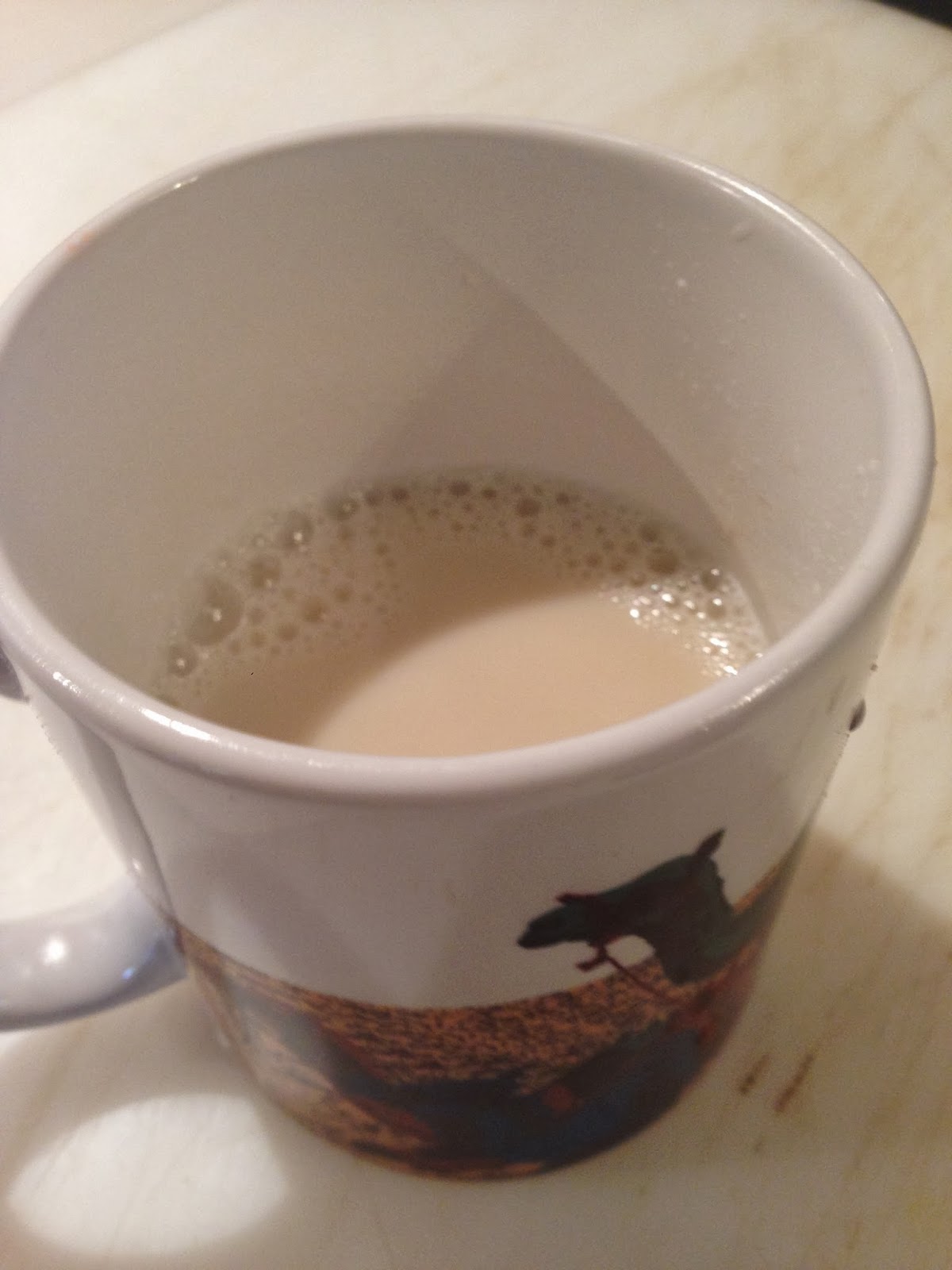
Soy milk has been consumed in Asia since thousands of years for breakfast. Now that I have recently had the great pleasure to drink a warm, freshly made soy milk on a cold morning in a village near Hangzhou, China, I would like to introduce this soothing, invigorating, healthy drink to you. 

Personally I have never liked soy milk from the grocery store. Or it is flavored or contains a lot of sugar or both and the plain one was never to my taste.
At home, the easily digestible milk drink (on contrary to cow's milk, which for many of us is totally undigestible) is prepared quickly. When I made it for the first time it seemed like a lot of work. But in the meantime it takes me maybe 30 minutes and while the milk is simmering you can do other things in the kitchen, but keep an eye on the milk. 

Is important though to consider eight hours beforehand that you would like to drink soy milk! Not so difficult to decide once you will have tasted your first pot of warm, homemade soy milk....I guarantee you!

For 1l soy milk you have to soak, best overnight, 125g dried soy beans grown organically in plenty of water. They triple their size approximately. Please use filtered water.

When you uncover them about 8 hours later, the next step is to take off the skin by rubbing the beans between your hands in the water. It is not essential to do this, but I found the taste better. 
Then get rid of the soaking water and put the beans with about three times the amount of fresh water in the blender until you get a creamy, milky consistency, about 3 minutes. The liquid then should be sieved through a cloth or a very fine strainer. 

Now boil the liquid and allow it to simmer for 15 minutes. A skin might form on the surface - just take it off.

The remaining pulp, which is called OKARA and can even be bought in grocery stores, at least in Japan (and imagine: you get the super healthy stuff for free!), can be used for example for baking. Last time I mixed the pulp with spices and herbs and made excellent "fake meat patties". Further, Okara makes a great fertilizer for your plants. Check out this great page regarding Okara: 

http://www.motherearthnews.com/real-food/okara-recipes-healthy-vegetarian-cooking-zmaz83sozshe.aspx#axzz2lHISH6KN

And you're done already!! Drink hot or allow to cool and place in the refrigerator, where it will stay fresh until about 3 days after preparation. You can also "flavor" your milk if you like: when blending add berries, vanilla extract, raw cocoa powder - the imagination knows no limits.


Nutritional value of soy milk: it is vegan and contains no lactose! It also contains much higher quality and less fat than cow's milk and no cholesterol. The soy protein is digested by the body almost 1:1, while providing many valuable vitamins, e.g. four times more folic acid than cow's milk, as well as healthy saponins and flavonoids. 

However, please remember that it contains much less calcium than cow's milk and no vitamin B12! But no worries, you can get calcium from many other healthy foodstuff as in dark leafy greens, Chinese cabbages, cheese, ocra, broccoli almonds and canned fish. B12 is to be found in sardines and salmon and - in lower quantities - in yoghurt.  

There is by the way no evidence that soy milk has adverse effects on fertility in males.